
Frequently Asked Questions
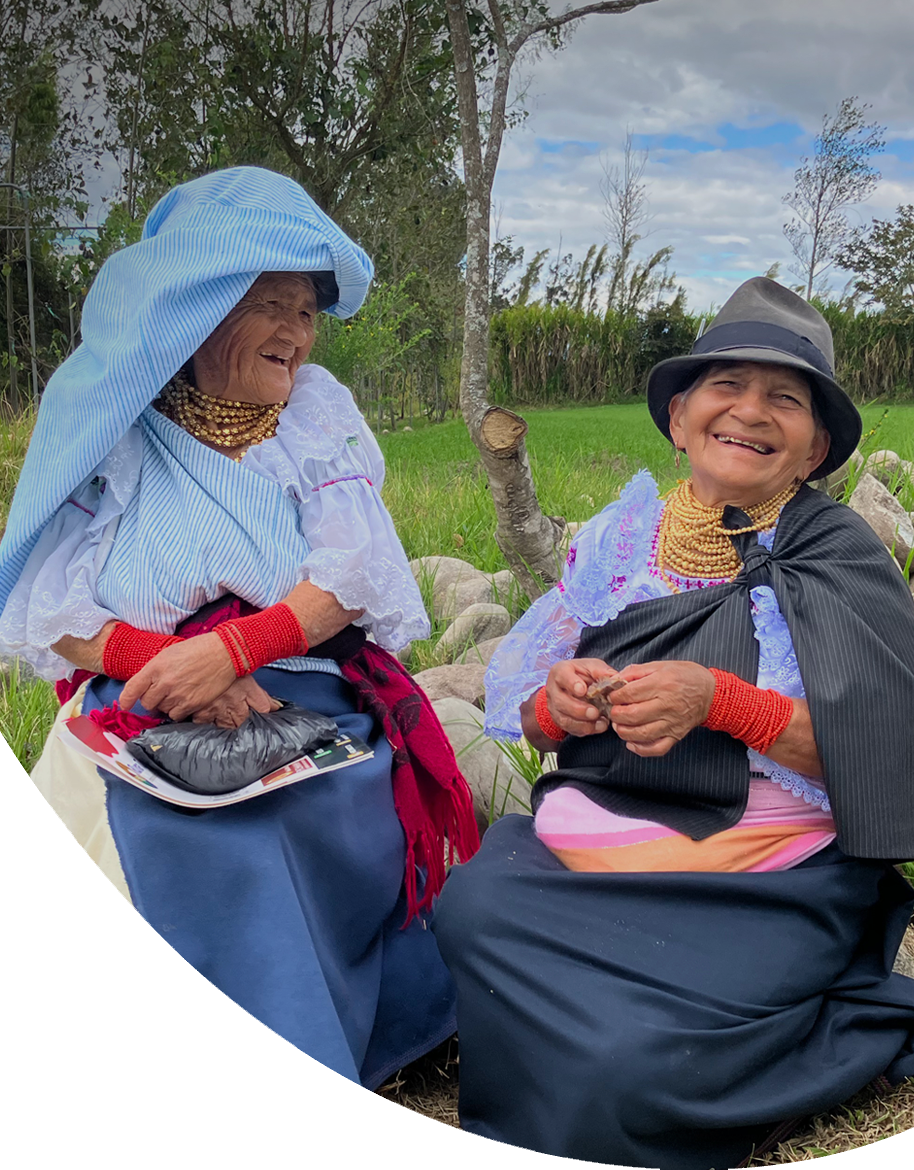
Members of an urban farming cooperative in Mexico City.
The Basics
- Where does IDEX work?
- What are the critical issues that IDEX and its overseas partner organizations aim to address?
- How is IDEX different from other international organizations?
Where Does My Money Go?
- Why should I as an individual donate to IDEX? Will my contributions make a difference?
- How can I be sure my money will go to the right people and will be used well?
- What is IDEX’s budget?
- Can I restrict my giving to one specific project or partner?
- Does IDEX accept government money?
- Where does IDEX get its revenue?
- How much of what I give goes to administrative costs?
- Can I sponsor an individual child through IDEX?
How Does IDEX Choose Partners and Give Grants?
- Ok, so IDEX has a "partnership model"—but how do you choose partners?
- What is the Catalyst Grants Program?
- Does IDEX have staff in the countries of the partners?
- Does IDEX use microcredit?
More About IDEX
- Who is IDEX’s Executive Director? Tell me about him.
- What role does IDEX’s Board play with IDEX’s business and strategic direction?
- How does IDEX collaborate with others working in the field?
The Basics
Where does IDEX work?
We in Guatemala, Mexico, India, Nepal, Zimbabwe, and South Africa.
What are the critical issues that IDEX and its overseas partner organizations aim to address?
The goal is poverty alleviation. Our partner organizations all serve the extreme poor, especially women, indigenous communities or ethnic minorities. Most programs have at least two out of three themes:
- Women’s empowerment – Women are key to improving a family’s wellbeing. Women often are heads of households when men leave for seasonal work, mines or cities in search of jobs. Women typically manage the education, diet and health of their children. When their lives improve, whole families become empowered.
- Building Local Economies – Poverty is the “800 pound gorilla in the room.” Helping families build income is basic to solving a host of other problems. This includes health, education, or participation in local advocacy campaigns or community initiatives.
- Caring for the Environment – Most of the communities IDEX supports are rural. So their land, water, or seeds are key to their economic development.
How is IDEX different from other international organizations?
We have turned international development on its head. How? By supporting local ideas and leadership. IDEX values the knowledge, priorities, and problem solving that come from local communities. This is very different from traditional large-scale models of global aid, which are often top-down and paternalistic in their approach to poverty alleviation. When the poor own the solutions to their problems, they are lasting. Their solutions are based on the local culture context, and priorities.
IDEX’s grantmaking focuses on:
- Community-based solutions and the wisdom of local leaders who are grounded in their communities.
- Multi-year flexible grants so that local partner organizations can apply funds where most needed. And they can plan for the future.
- Mid-size organizations (budgets of $50,000 – $150,000). At this size, groups are small enough to supporting local leadership and innovation. Yet they are large enough to have good management systems, financial transparency, and accounting procedures that meet the needs of U.S donors.
- Additional resources as opportunities arise. This may include participation in conferences in the US or elsewhere, assistance with fundraising or leveraging other resources.
- Careful vetting, selection and monitoring of promising groups so that donors can trust their money is being put to good use.
Where Does My Money Go?
Why should I as an individual donate to IDEX? Will my contributions make a difference?
Individual donations are the most flexible type of funding we receive and are essential to IDEX’s growth and stability. IDEX receives over half of our annual income from individuals. All gifts no matter how large or small make a big difference. $50 can pay school fees for one girl in Zimbabwe. $10,000 can bring permanent water security to 1 small village in desert areas of India. We are all a part of the solution. See our brochure, You Can Make a Difference, to learn more ways your gift can make an impact.
Your individual support also enables IDEX to conduct its work with effective and critical programs, give support where we know it is most needed, maintain core staff, maintain communication systems and tools, and purchase office equipment that make our work possible.
How can I be sure my money will go to the right people and will be used well?
One of IDEX’s most basic roles, and a fundamental way in which IDEX adds value, is by selecting sound, innovative organizations as partners. IDEX has worked with many current partners for years and is highly confident that funds are used for the stated purposes. Partners are selected carefully based on a long list of criteria in which transparency and accountability are essential. IDEX staff visits partners regularly to see their work and accomplishments. By having long-term relationships with partners, we can visit the work and see accomplishments over time. Partners provide reports twice per year, including a financial accounting of the use of funds. Of course, in the age of the Internet, program staff is in regular contact with partners by email or phone.
What is IDEX’s budget?
For the Fiscal Year 2010 (July 1, 2009 – June 30, 2010), the Board-approved budget is $944,599. We expect to give grants to 22 organizations in six countries, ranging from $5,000 to $50,000 or more.
Can I restrict my giving to one specific project or partner?
Yes and no. According to U.S. tax law, you may not designate your donation to a specific organization abroad unless you are willing to forgo the tax deduction that you would ordinarily receive in making a donation to a US based 501© (3) tax-exempt organization. The rationale is that since overseas organizations, naturally, do not register with the IRS, they have not undergone the same scrutiny of US organizations as to standard accounting procedures and financial transparency.
However, you may restrict your gift of $1,000 or more to an interest area of your choice (such as women’s empowerment, economic development, sustainable natural resource management). Similarly, you may restrict your donation for a specific country, region, or population (such as women, indigenous people, youth etc.). In either instance, a tax deduction is allowable and we will ensure that your donation goes to a group that matches your designation. Restricted gifts must be outlined in writing. IDEX allocates 10% of the gift for programmatic and administrative costs.
Does IDEX accept government money?
No. To avoid any influence on how IDEX engages with specific groups overseas, IDEX neither seeks nor receives money of any kind from local, state, national or international governments. This allows us to work with innovative groups that fall outside the radar of larger aid agencies restricted by the sometimes bureaucratic requirements of government contracts.
Where does IDEX get its revenue?
Audited figures for the 2009 Fiscal Year are expected to show revenue from the following sources: individual donors and events (48%), foundations (51%), small businesses, corporations, community and church groups (1%).
How much of what I give goes to administrative costs?
In most fiscal years, approximately 18% is used for administrative costs. This is below the nonprofit sector norm of 20-25%, especially for small organizations. In other words, 82 cents of every $1.00 donated goes towards our core work in Africa, Asia, and Latin America. Of note, IDEX leverages tremendous volunteer and pro bono support. Because of this, the true overhead is an even smaller proportion of IDEX’s activity.
Can I sponsor an individual child through IDEX?
The short answer is no. The long answer is that IDEX supports organizations that work to help community members to address the causes and consequences of poverty. While supporting children is one aspect of this, we support broader efforts that affect entire families and communities.
IDEX’s view is that child sponsorship projects can be problematic. Sponsoring a child does not usually address the issues that lead to a community’s poverty. For example, if one child has schooling and clothes, but the family doesn’t have an ongoing source of income, access to land, etc. then the child may be in school but her family is not much better off. Also, high administrative costs are required to maintain contact between the child and donor. This keeps the local organization busy with the donor’s concerns, distracting from the community’s development work (encouraging the child to write letters and send them to the donor, and vice versa, etc).
In many cases, only some children in a family get supported while others do not, leading to resentments. Finally, we think it matters that local participants are leading the change they wish to see and are assuming a mindset of being in charge of their lives. Therefore, we think it makes sense to not have a constant reminder that a child’s future rests with a donor, even a well-meaning one.
How Does IDEX Choose Partners and Give Grants?
Okay, so IDEX has a "partnership model"—but how do you choose partners?
IDEX selects partners through the Catalyst Grant Program, described below.
What is the Catalyst Grants Program?
The Catalyst Grants Program is a way of starting a relationship with a new organization. Because partnership is a commitment for IDEX of 3 to 6 years or more, we choose partners carefully, with confidence that the partner organization operates in an accountable and transparent way serving poor communities. Catalyst Grantees receive $5,000 for a 6- to 12-month project. The small grant is a low-risk way to get to know and build trust with a new organization before giving larger grants.
Does IDEX have staff in the countries of the partners?
No. Instead, the program staff travels to the regions regularly to conduct necessary business. During those visits, staff meets with partners, the communities where IDEX-supported programs are taking place and possible new partners. Other communication with partners takes place monthly via phone and even more frequently via E-mail. Also, we work with some local consultants who help with site visits and monitoring of the work.
Does IDEX use microcredit?
Yes, but not the variety that has captured the public’s imagination. Microfinance – a way of providing very small loans – comes in many formats and under many names. They vary according to who makes decisions about loans, fund management and administrative issues.
- In India and Nepal the most popular model among our partner organizations is called a “Self Help Group” or a “Savings and Credit Group.” Women save money together and provide loans to each other based on their combined savings. Then, IDEX partners link women to existing banks. This way, they can open accounts and receive loan funds for their group. Individually, this is often not possible for the very poor. Also, this format helps to forge a culture of savings and it brings women into the formal banking system.
- In Nepal, legal cooperatives with shareholders are common. They are usually formed by bringing together several Savings and Credit Groups.
- In Mexico and Guatemala, our partners use a “Revolving Loan Fund” format. Whole communities take a loan together for a group project.
At IDEX, we believe that affordable credit is an important tool. But it is just one tool in the toolbox. Poor communities often have many challenges. They often have the poorest quality land. Women often have no rights. Business infrastructure is often limited.
IDEX values the models mentioned above because they empower the borrowers and savers in many ways, not just financially. The groups often address other community issues. It is highly sustainable. And groups don’t need foreign funds to get started or grow. Learn more about microfinance.
More about IDEX
Who is IDEX’s Executive Director? Tell me about him.
Pete Stanga has been the Executive Director of IDEX since January 2004. Pete oversees the organization’s mission to support community-based poverty alleviation.
Before joining IDEX, Pete dedicated much of his career to international human rights, serving as Co-Director of Peace Brigades International/USA, an organization that protects human rights workers in areas of repression throughout the world. In addition, he coordinated social reconstruction projects with displaced populations in former-Yugoslavia with the Anti-War Campaign of Croatia, and a United Nations Social Reconstruction Program in Bosnia.
Pete serves on the Board of Directors of Grantmakers without Borders. He has a Bachelor’s Degree from University of California at Berkeley, and a M.P.A. from Columbia University’s School of International and Public Affairs.
What role does IDEX’s Board play with IDEX’s business and strategic direction?
The Board of Directors under the leadership of Chair, Kenneth James, governs IDEX regarding its mission and strategic direction. It hires and evaluates IDEX’s executive director. The Board conducts financial oversight and participates in fundraising activities. Kenneth leads a 13-member Board that includes professionals from diverse backgrounds and professions. Most have lived and worked overseas.
How does IDEX collaborate with others working in the field?
IDEX works with numerous organizations that operate with a similar philosophy and focus on overseas issues. IDEX works collaboratively with these organizations to promote best practices and to remain informed of related activities in the countries where we work, which can lead to coordination as opportunities arise. A selected list includes:
- Grantmakers Without Borders (GwoB) – Pete Stanga, IDEX Executive Director serves on the Board of Directors.
- New Global Citizens – youth fundraising activities in support of selected IDEX partners
- GlobalGiving.com – online fundraising portal that features many of IDEX’s partners and grantees
- The World Affairs Council of Northern California – to promote topics on international development
- International Museum of Women (IMOW) in San Francisco – IDEX and IMOW jointly promote Bay Area public educational programs focusing on women’s empowerment.
Members of the IDEX staff are also affiliated with Women Advancing Microfinance-Northern California, Priority Africa Network, International Development Professionals Network, Spark, Young Nonprofit Professionals Network, Social Enterprise Alliance, and the international volunteering organization, CUSO-VSO.
Blog
IDEX NewsFlash, March 10, 2010
Thursday, March 11, 2010
A collection of breaking news stories about the countries where IDEX works, and the issues we address.