
A Path Out Of Poverty

Hlomelikusasa - South Africa - Food Security

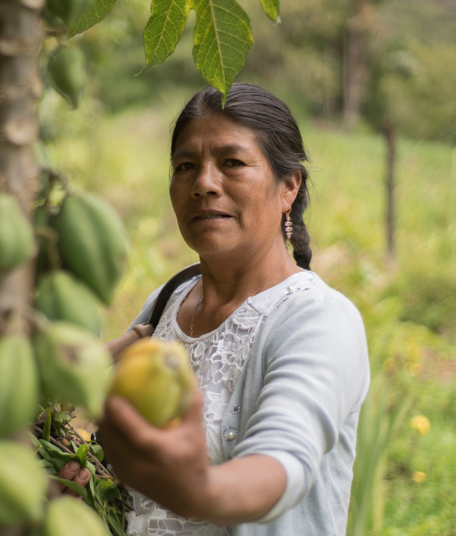
A member of the Sizanani Gardening Group

A member of the Sizanani Gardening Group. Sizanani translates into "help each other" in Zulu.

"People-Driven" Development

The story of the Sizanani Gardening Group in KwaZulu-Natal, South Africa is one of many that inspire us. When we say that IDEX supports "people-driven" development, this is what we mean.

Near the Zulu community of Mpola (a Zulu phrase meaning "cool"), in a mountainous valley lies a half-acre of land called Dozen Oaks.

A year ago this land was an overgrown field. But after only 9 months of gardening, the group of farmers who have worked this land have a bounty of vegetables: potatoes, yams, leafy greens, onions, peppers, spinach, and beans.

The field was in a fertile valley next to a flowing river, but had been completely neglected.

The land was once a coffee farm, but had long been abandoned. 2 women, Cornelia Dubuzana and Nomusa Msomi, along with several of their neighbors in Mpola, heard about this land and went to see it for themselves.

They saw a possibility for a brighter future. A future where, if they farmed together, they could have more than enough food for their families and could generate an income from selling the rest.

Backyard gardens are becoming the solution to soaring food prices

Many women like Cornelia and Nomusa already have backyard gardens as they cannot afford to buy food in the shops in town. In response to soaring food prices, this has become a common survival strategy not just in Mpola but also in communities around the world.

IDEX partner, Hlomelikusasa, works with women to develop their skills around real solutions –like small-scale sustainable agriculture and income-generating projects— to both food insecurity and poverty.

The inspiration for Nomusa and Cornelia's idea came when they, together with 6 of their neighbors, joined Hlomelikusasa's membership and formed a self-help group.

At first, the group was interested in a workshop Hlomelikusasa was offering on how to access markets for the vegetables they were growing at home on modest plots. They also participated in a workshop to learn more about their rights under the new South Africa constitution: basic human rights, like owning property, that were previously denied to them under Apartheid.

It was through these workshops that many of the members realized that they had every right –not to mention the will and the knowledge— to start a project of their own.

At the time, a local church group was in charge of the abandoned coffee farm. The group of women approached the church with their plan. After persistent negotiation, the church decided to hand over the deed to the group. The land was theirs!

They named the group Sizanani Gardening Project. Sizanani translates into "help each other" in Zulu.

For nearly 25 years, IDEX has seen that the most successful projects are the ones where community members themselves "own" the process. In this case, not only do they own the process, they own the land, too.

Every day, from early in the morning until the afternoon, the group comes to tend the garden. One half of the group works one day, and the other half the next. This way they can also take care of their families and work on other projects, like the small kiosk Cornelia runs selling sweets, fruits, and vegetables.

Early on, the group decided to separate the garden into plots with each member focusing on her own plot. But they sell as one, and split the proceeds evenly among the members, setting aside money to buy seeds or garden tools.

A Path Out Of Poverty

The group's vision is to be known for its quality, organic produce. They are well on their way. The spinach they are currently growing is a best-selling item at the market. And they recently harvested 22 bags of potatoes, which sell for around R50 ($5.80) per bag.

Today, this group of 8 incredible farmers has transformed this land into a place that now feeds and sustains their family and neighbors.

No longer in survival mode, the group members tell us that by eating fruit and vegetables regularly, their families' overall health has improved. And they are earning enough to send their children to school.

From survival to a dignified livelihood. The resources to think about and plan for their futures. This is not a quick fix to alleviating poverty. This is a real fix: a pathway out of poverty.

With Hlomelikusasa's assistance, the group is registering as an official cooperative and has found new markets for their produce, including a local health clinic. The group has also participated in workshops on critical, relevant topics like domestic violence and HIV prevention, plus project management and business skills.

"This is a very, very strong group," comments Zandile Malinga, Hlomelikusasa's Project Coordinator. Zandile herself started her work with Hlomelikusasa as a participant in an income-generation project.

"Whatever challenges they face, they overcome them," says Zandile, who visits the group monthly. During one visit, the group discussed how they hand-irrigate their crops, hauling water from the river bucket-by-bucket. After brainstorming with Zandile, the group is now applying for an irrigation system through the Department of Agriculture.

"They are always looking towards the future. This is a garden that will be farmed fruitfully for years to come."

IDEX's role is in assisting groups like Hlomelikusasa that have the trust of their communities. They are creating local solutions to local problems. They are tackling the root causes of poverty by empowering women, building local economies, and caring for the environment.

Partnering with innovative groups at the grassroots is a simple yet surprisingly uncommon approach in the field of international aid. And yet this approach has proven effective for impoverished communities around the world.

You have the opportunity to be a part of this change. You can have a direct and positive impact on individual lives.

Together—with your gift—our support can impact entire communities. Donate now!
Share/Save/Bookmark
get the latest news from IDEX
Join our email list

Blog

Meeting the Women of the Manipuri Women Gun Survivors Network, India

Monday, September 6, 2010

Binalakshmi Nepram founded Manipuri Women Gun Survivors Network in 2004 after witnessing the aftermath of the killing of 27-year old Buddhi Moirangthem in Wabgai Lamkhai village southeast of Imphal on Christmas Eve.