
India

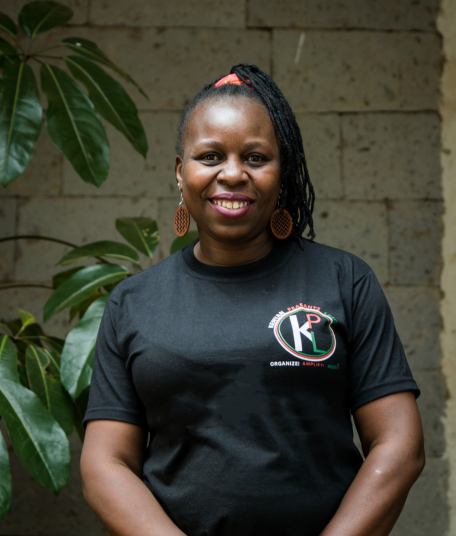
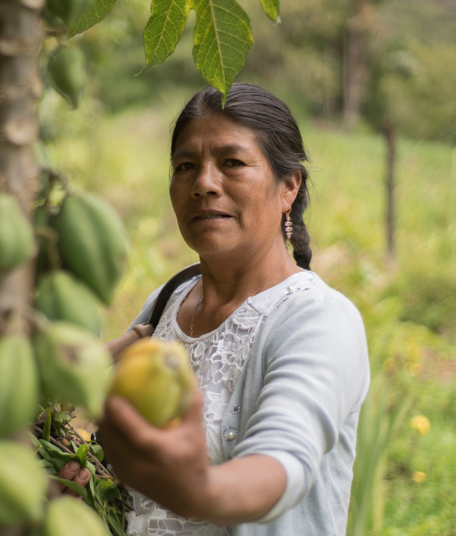
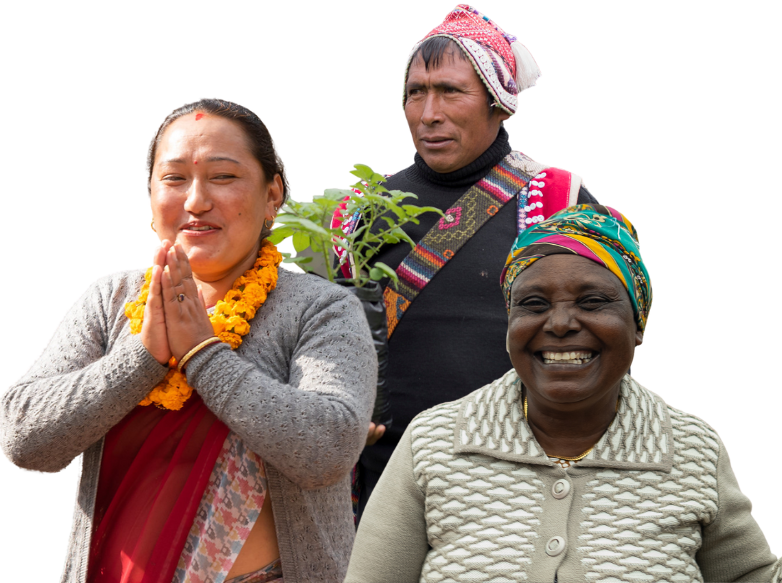
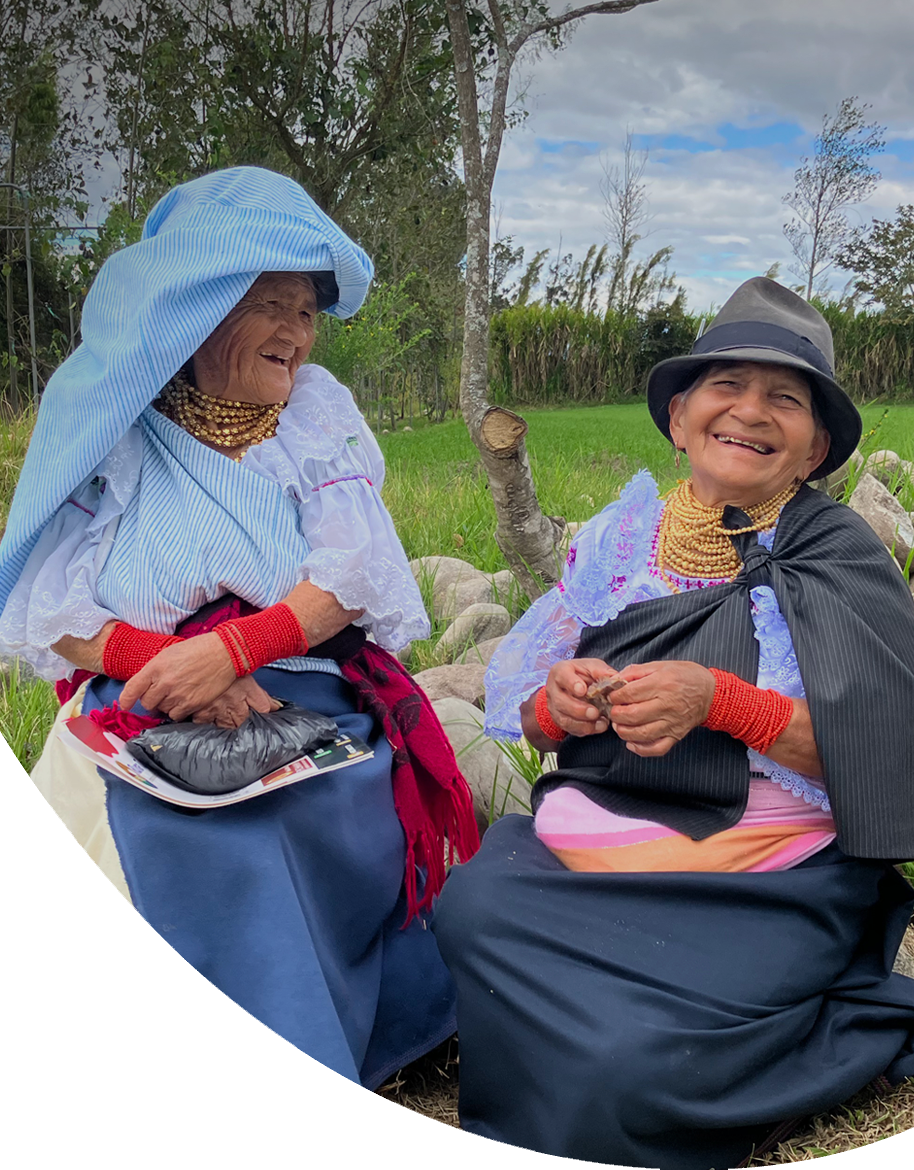
Sahyog Sansthan SHG - India
Sahyog Sansthan self-help group
member.

Partners - GRAVIS | Manavi | Sahyog Sansthan


IDEX began funding projects in India in 1988. Since then, we have funded a wide array of projects, ranging from a school library, to women’s empowerment programs, to organic farming and micro enterprise schemes.

Few countries in the world can boast such diversity or so lively a contemporary culture as India, the world’s second most populated country (with over 1 billion people). Indians speak over 1,500 different mother tongues and have 18 official languages.

However, alongside tremendous diversity lies deep-rooted societal prejudices. The caste and patriarchal systems of India have contributed to marginalization for many thousands of people for centuries. Even today, caste largely determines the jobs people may obtain, whom they may marry, and what socio-economic class they will be locked into. Those who fall even below the lowest caste are known as the "untouchables" or "Dalits", and people in this category face extreme discrimination.

Between a third and a half of India’s population are estimated to survive on so little food each day that they are chronically starved. The diets of the poor, rather than improving as the government claims, have become even more inadequate in the past 30 years. Nearly 90% of the country’s children are chronically malnourished, a record rivaled only by Bangladesh. In addition to high levels of hunger and malnutrition, two-thirds of India’s 900 million lowest income households live below the poverty line, and an estimated 48% of adults in India are illiterate.

Over the last two years there has been tremendous political and economic upheaval at a national and local level in India. India has been opening its doors to the free market with the consequent effect of creating a new middle class, empowering the wealthy and putting at risk the resources available to the poor. These shifts have increased the suffering of the poor, who rely on services which the government is currently unable to provide such as primary education, health care and the public distribution system.

In combating poverty and discrimination, India has a long tradition of social service, social reform and voluntary agencies. Community and non-governmental organizations are playing an increasingly active role in working with marginalized people in promoting self-reliant communities based on principles of social justice. IDEX works with three such organizations in India: Gravis, and Sahyog Sansthan both of which work in the desert communities of Rajasthan, and Manavi, which works with women in India’s highly marginalized region of Bihar.

Being the second most populated country in the world, with a population of over 1 billion, the people of India have over 1,500 different mother tongues. The 18 "official" languages each have their own script, literary tradition, and contemporary writers and poets. The ethnic makeup of India is 72% Indo-Aryan, 25% Dravidian, and 3% Mongoloid and other. In religion, Hindus comprise 80% of the population, Muslims 14%, Christians 2.4%, Sikhs 2%, Buddhists 0.7%, Jains 0.5%, and others 0.4%.

Alongside tremendous diversity lies deep-rooted social inequalities. The caste and patriarchal systems have contributed to social marginalization for centuries. Though there has been some progress made in raising awareness and introducing legislation to empower marginalized groups and to remove caste discrimination, these practices still exist particularly in the rural areas.

In recent years there has been significant reductions in child and maternal mortality, however India still suffers from inadequate education and health care. This has been especially true since the introduction of structural adjustment policies in the early 1990s which led to reductions in social spending. In addition, military spending has always been high in India, due to political differences with neighboring countries.

According to statistics gathered in the 1990s, an estimated 48% of adults are illiterate, 53% of all children are underweight and undernourished, and 53% of the population live on less than $1 a day. Moreover, 19% lack access to safe water, and 71% don’t have access to proper sanitation.

In 1993 India had the twelfth largest GDP in the world, yet in per capita terms it was still among the poorest countries globally. The poverty of the many and the wealth of the few are largely a result of India's policy of favoring industrial growth over agricultural development. Although the country as a whole may be getting richer, the wealth is going to those employed in industry and services rather than agriculture, where the majority of the labor force is still concentrated. As a result, the gap between the rich and the poor continues to grow. Today, a large share of the population, as much as 40%, remains too poor to afford an adequate diet.

In combating poverty and discrimination, India has a long tradition of social service, social reform and voluntary agencies. Organizations emerged in India soon after independence in 1947. Today, India has a vigorous non-profit sector. Although there has been no complete census of non-profit organizations, it is estimated that about 25,000-30,000 are active in India. The new trend in the non-profit sector in India is to scale up their initiatives to address social issues on a mass scale. Many groups have been very successful in addressing issues such as child labor and water resource management through large projects which involve the active participation of project beneficiaries themselves.

IDEX partners in India (Gravis, Manavi and Sahyog Sansthan) work with marginalized communities to promote economic and social development that is based on the needs and realities of the local population.


Links


Join our email list!


Email Marketing by VerticalResponse


Network with IDEX: