
Posts Tagged ‘WACN’

Mar

8

IDEX Partners Take Action on International Women’s Day

2011

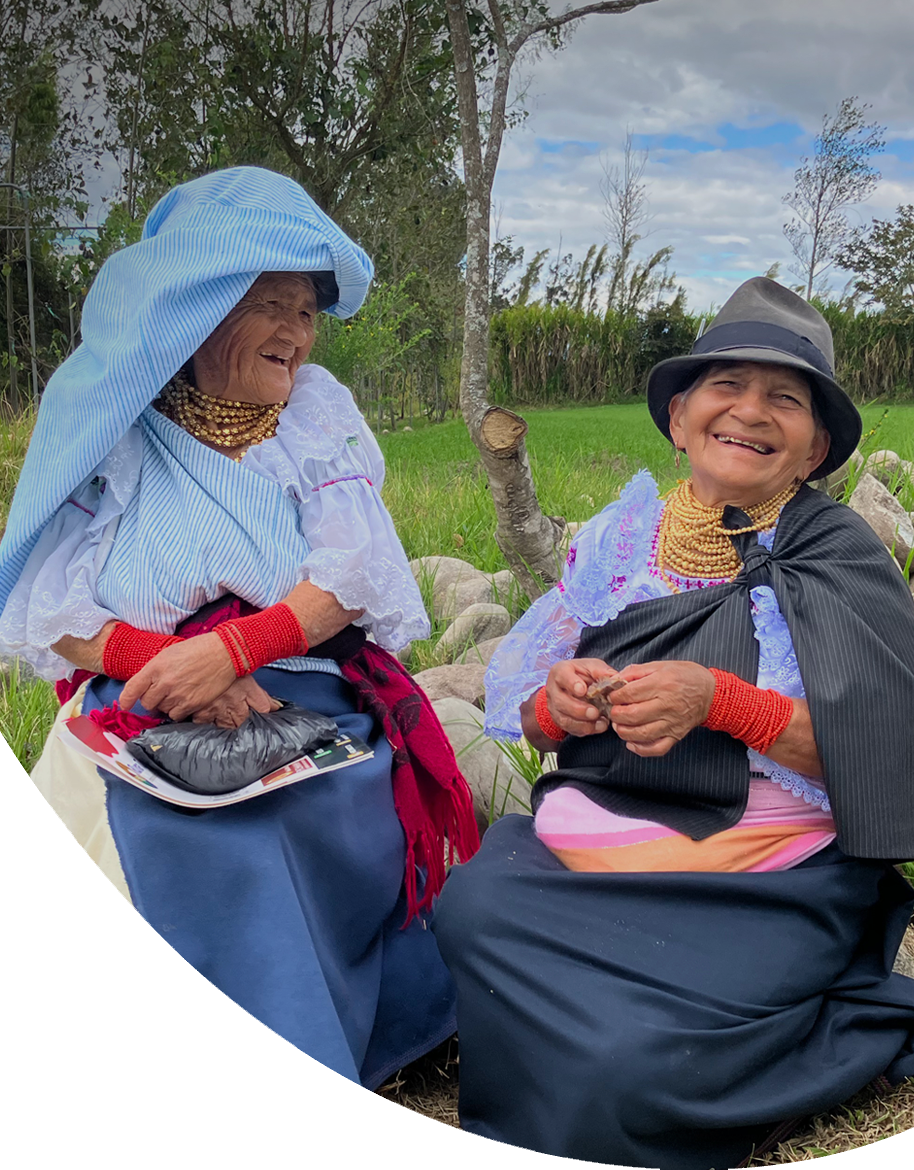
A group of women who are part of APROSADSE's microcredit program.

March 8th is International Women’s Day and 2011 marks the 100th anniversary of this day to celebrate women across the globe.

IDEX staff and volunteers are taking part in Mother’s March in San Francisco- come join us at 4:30pm near the 16th St. BART station and march to protest war and oppression, support social justice and solidarity with women around the world. See our event posting HERE.

IDEX also stands in solidarity with our partners around the world who are celebrating this historic day. We are getting updates from Guatemala, Mexico, South Africa, and Nepal.

Read about the exciting events they are planning below:

AFEDES: In Sacatepéquez, Guatemala, AFEDES is coordinating with other women’s organizations in holding a press conference to demand the Guatemalan state fund the construction of a women’s center for the survivors of violence and to demand public investment for women’s development, including implementing the Femicide Law. Although the 2008 law, a huge victory for feminists and women’s rights organizations, considers violence against women a punishable act, many women and those in the judicial system are unaware of the law and thus implementation is weak. AFEDES has been creating awareness on the law and empowers women to speak up for their rights and come forward about abuse.

APROSADSE: APROSADSE is organizing a celebration with a group of women and mothers of families of the students who participate in APROSADSE’s radio distance-learning education program. They are planning a morning filled with exchanging experiences as housewives and integrating a lens of gender equity. The official theme for International Women’s Day activities is “Access to education for women and girls: training, science and technology” – sharing the rights that women have to education for economic development and social change.

Nepi Behña: Nepi Behña in Mexico is working together with RedPar – National Network of Rural Promoters and Advisors – in a National Gathering of indigenous, rural and mixed race women this week. The gathering will address the findings of an investigation they carried out last year about the impact of the food crisis and climate change – as well as the changes in migration patterns.

Positive Women’s Network: Positive Women’s Network in South Africa will be holding an event to celebrate the lives and achievements of women living with HIV/AIDS. The event will host 50 women from PWN outreach areas and will provide a platform for the women to recognize and applaud each other for their achievements as women, PLWHA, mothers, caregivers and community members. The event will also provide a discussion session for the women to engage each other on issues that predispose women to gender-based violence and risky behaviors leading to HIV/AIDS as well as methods of increasing the involvement of women in HIV/AIDS and sexual and reproductive health policy design and implementation.

Whole World Women Association: WWWA, also in South Africa, will have an event on Saturday, March 12th to celebrate International Women’s Day. The theme is “Women’s Reproductive Health.” An International Women’s Day Panel Discussion will be held with representatives of the reproductive rights alliance, gender activists, and feminists attending.

Women’s Awareness Center Nepal: Women Awareness Center Nepal’s training and resource center will be inaugurated by rural women on March 8th. Women from the village will share their experiences of  empowerment with the audience in the program and after the inauguration, 1000  members of WACN promoted cooperatives will participate in a rally in  Kathmandu on the occasion of 100th Women’s Day in support of the IWD theme for this year “Equal access to education,  training and science and technology: path way to decent work for women.” Informational placards displayed at the rally will address challenges such as,  tax break for cooperatives run by village  women, allocate more resources for disadvantaged women,  timely drafting of the constitution, and the right to citizenship through motherhood.

Look for photos and an update from the event on our blog!

Jun

28

Reflections on the Social Forum and Social Justice

2010

IDEX partners, Rose Williams from Biowatch South Africa and Prativa Subedi from the Women Awareness Center, Nepal (WACN) along with IDEX Staff, Katherine Zavala, Yeshica Weerasekera and Rajasvini Bhansali were in Detroit last week at the second U.S. Social Forum. They have each blogged about their experience at the US Social Forum. Prativa Subedi, Founder and Director of WACN reflects on her time in Detroit and what the US Social Forum can mean for social justice.

We arrived in Detroit and checked into the Marriott Hotel. With 72 floors, the Marriott is just one of the many skyscrapers in Detroit. Coming from Nepal I wasn’t used to being inside such tall buildings. I had a room on the 34th floor. The view was amazing, but it seemed unnatural to be so high without having hiked up a mountain.

I found that the majority of people participating in US Social Forum are very concerned about creating a just and sustainable society. Many of the workshops goals were to raise awareness and share best practices in order to bring about economic and social justice, and gender justice. I found some similarities to the Fourth World Conference on Women held in Beijing in 1995 where we looked at the world from women’s lens. At the Social Forum, we viewed the world with a social justice lens to help us see the world that want to live in and understand how to survive with dignity.

There were many workshops, over 1000. All were equally important and relevant to my work in Nepal. Moreover, it was very difficult to decide which I should participate in. I selected those of most interest, prioritized these, and finally had my agenda for the conference. Finding the right rooms was just as challenging. Maps were used everywhere to move around the forum. This was a new experience for me, as we don’t use maps in Nepal to get around.

The “Poverty Summit,” food security sessions were on Tuesday, June 22, before the formal opening ceremony. Many people who participated in these workshops are concerned about the community ownership in the food production and marketing processes. They are against systems that put profit before everything else. However, in developed countries people do not know the value of community-based development activities and sustainable agriculture.

Carrying the earth at the USSF Opening Ceremony

Carrying the earth at the USSF Opening Ceremony

The opening ceremony started outside and moved into Cobo Hall. I observed that the rally was very well organized as it slowly entered inside the auditorium to celebrate. Seeing people carrying the earth impressed me, we need to take care of our Mother Earth if we want to survive.

The next day (Wednesday) I participated in the workshop on “Women Fighting Poverty; Stories from the Frontlines and Women’s Movement 21st Century” and “Historic Movement for Funding Social Justice Organizing in 21st Century.” Participants and organizers were talking a lot about the loopholes of welfare scheme introduced in 1960 in USA. I shared my experience of women coming together to create their own social security systems by themselves. Together they are able to support one another through the savings and credit groups and women cooperatives that they form.

On June 24, I joined the “Women and Global Justice” workshop organized by the Center for Change. One of the main speakers, a feminist scholar and writer, spoke about the Transnational Feminist Movement, which engages in direct action and advocacy and doesn’t just focus on rights. I agree with her opinion. As such I am involved in the economic empowerment of women through community-based development activities and advocacy at the same time. I shared my opinion of linking human rights with gender and development. It was a very fruitful workshop that I enjoyed.

Later the same day I participated in “Roots of the Economic Crisis and the Case for a Solidarity Economy” organized by Center for Popular Economics. Participants were seeking alternative economic activities to sustain families and society. People shared how the best model could be cooperatives owned by community. A part of this session, debated the root causes of the economic crisis. One statistic highlighted was that in the 1970s, household debt in US was 40% of GDP, but by 2008, household debt was 90% of GDP. There were trends leading to this crisis, stagnant wages, inequality, deregulation and financializations. Due to the decline in manufacturing, workers are paid less. I can relate it to the Nepal context in that while economic liberalized policies were introduced, a majority of the rural population still has no access to formal financial institutions. Rural women see cooperatives as an alternative model that can both reduce the negative impacts of a market economy and allow them access benefits now available to them as a result of a market economy.

I had an “Aha” moment listening to this discussion. My organization, WACN, has already been able to establish community owned development activities. This has strengthened many women’s cooperatives in Nepal. Our economy is subsistence in nature and I see strength in it. But it can’t feed everyone. We need to commercialize and scale up, but in a way that farmers (male and female) can keep control of decision-making. This is important to prevent future mismanagement, such as the use of chemical fertilizers for example. These were introduced two decades ago without providing correct information to farmers. Now the quality of the soil has degraded and again farmers have poor yields. They are now trying to improve their soil using traditional methods like composting. There is a need to protect this sustaining type of lifestyle that introduces women to friendly and eco-friendly development.

I hold a degree in economics and work for the economic and social empowerment of women. Most of the workshops related to economics at the grassroots attracted me and so I joined the workshop “Economics at the Grassroots.” Through this workshop, and others like it I learned a lot about the collective and cooperative activities and initiatives in the US.

Finally, I had the pleasure to be part of the IDEX group with Vini, Yeshica, and Katherine. I also had the opportunity to meet Rose Williams, Executive Director of another IDEX grantee Biowatch.

Prativa Subedi & Rose Williams

Prativa Subedi & Rose Williams

I value and respect the work of Biowatch and attended the IDEX / Biowatch panel on Friday, June 25. There were lively discussions about food security and sustainable agriculture. Legal steps had been taken by Biowatch to get rid of Genetically Modified (GM) crops in their area and to get proper information from the South Africa government and Monsanto about the environmental impact of GM crops. After many years of legal battles, they were successful. This demonstrated how if one is working for disadvantaged people you have to struggle with the system in the respective countries.

In looking back at the week I reflected on how The Fourth World Conference on Women in Beijing motivated many women to work for women’s rights and promote women’s issues. I hope that space that was provided by the US Social Forum will inspire many of the participants to continue to address the issue of social justice.

I would like to thank IDEX for giving me the opportunity to share some of my experiences in different events in the Bay Area with many development organizations including the US Social Forum. It gave me strength to share about my work and I gained more confidence to share the stories of sustainable farming and cooperatives managed by rural women in Nepal.

Jun

17

Prativa Subedi Joins IDEX Supporters At “From The Ground Up”

2010

Vini & Pratia

Vini Bhansali & Prativa Subedi - photo by Jan Sturmann

About 175 guests joined IDEX staff, board members, interns and volunteers June 9th at the Solarium in downtown San Francisco for our annual event and silent auction celebrating the success of IDEX’s partners in Africa, Asia and Latin America.

Our guest Speaker Prativa Subedi, Founder and President of the Nepalese community organization Women Awareness Center Nepal (WACN), and author of “Nepali Women at the Crossroads,” delivered a moving speech that underscored the power of cooperation and the importance of local, long-term projects to help women achieve self-sufficiency.

“With a little opportunity women can stand on their own two feet,” said Subedi who is on a 17-day visit to San Francisco to discuss WACN’s work. “To improve the social and economic status of women we must work with them.”

Current IDEX Executive Director Vini Bhansali also stressed the power of cooperation to reduce poverty and inequality, and praised IDEX partners for their cost-effective, innovative solutions to poverty during a year marked by a diminishing of economic opportunities worldwide.

“Most durable solutions to poverty come from the ground up,” she noted. “The most durable solutions to inequality are based on transformative relationships.”

We were also pleased to have a multigenerational presence at the event – three former IDEX directors were among the energetic guests who mingled over wine, appetizers and tasty vegan tamales courtesy of Gracias Madre.

“I came because people involved in development work always have openness and something to share,” said Michael Levitin, a San-Francisco-based journalist who has been involved in Latin American issues for many years. “Whenever I see an organization reaching out to indigenous communities…I am always supportive.”

By the conclusion of the evening, IDEX had raised approximately $13,500 to provide continuing support to our partners. We extend a sincere thank you to our board, staff, interns, volunteers and to all of our guests who made the evening such a success.

Blog by Erin Zaleski, Journalist & IDEX Volunteer

Jan

15

2009

Happy New Year, IDEX friends and champions. 2009 is already starting with a great opportunity that I want to share with you all.

Our partner, Women Awareness Center Nepal (WACN) has been selected by GlobalGiving.com to receive a matching grant.

Donate $10, $50, $100 or more and see your gift immediately doubled.

Donations to IDEX partner WACN will be matched 100% when you donate to WACN on GlobalGiving here.

WACN was created by a group of women for promoting women’s empowerment in Nepal. WACN helps women to create incomes and encourages women to participate in the decision-making process within their family, and their communities.

Watch our short video on our work in Nepal and learn more about WACN’s work.

$25,000 is up for grabs, but two other groups based in Nepal will also receive matching funds from this donor. So hurry, the $25,000 won’t be there for long.

Donate to WACN and then spread the word, post an update on Facebook, Twitter, your blog and email signature and encourage your friends to give.

Photo Credit: Jan Stürmann.