
Posts Tagged ‘Nepi Behna’

IDEX staff and Ñepi Behña staff with women cooperative members in Hidalgo, Mexico.
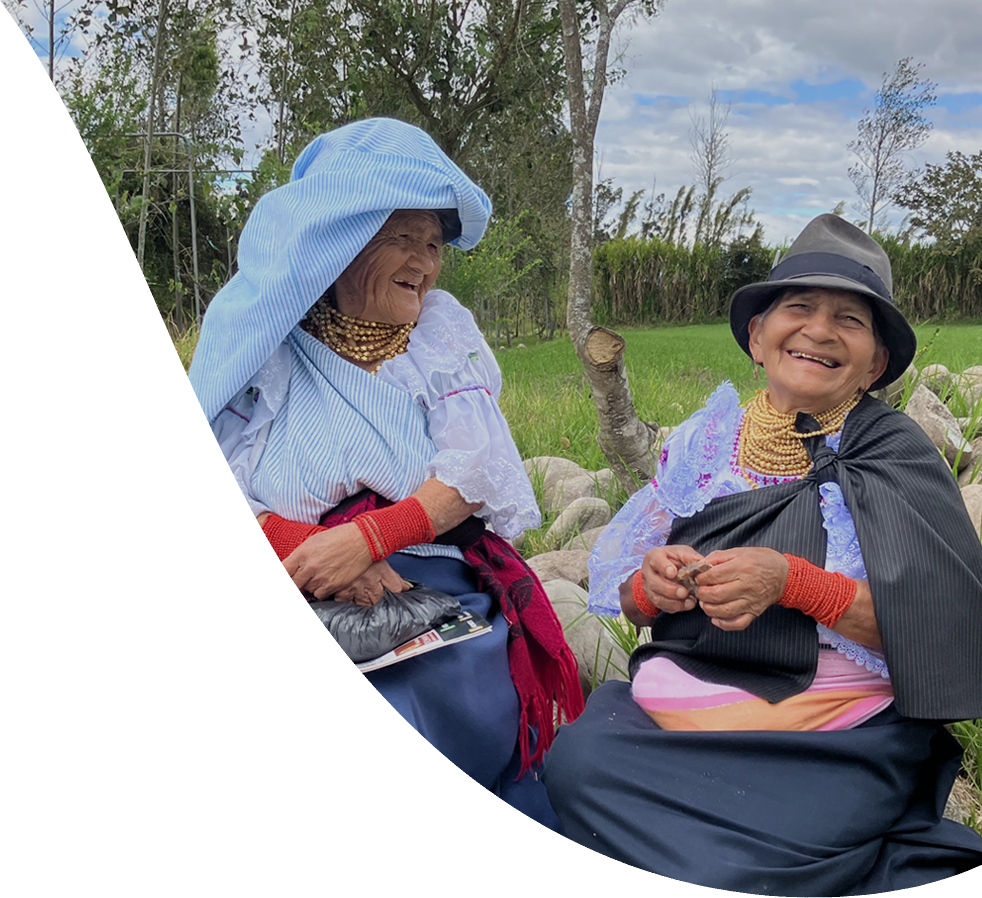
Paula Vlamings, an IDEX Board Member, recently returned from a memorable and inspiring partner visit with the women of Ñepi Behña (Women of Dignity), one of IDEX’s partners that supports several women’s cooperatives in the area of Hildalgo, north of Mexico City.
Along with Katherine, IDEX’s Program Manager of Grassroots Alliances and several staff members of Ñepi Behña, we piled into a pickup van and headed out from Mexico City for a 2-hour drive to the region of Valle de Mezquital. Read the rest of this entry »
The following was written by Katherine Zavala, Program Manager of Grassroots Alliances, after her recent site visit to Mexico.
I’ve just returned from Hidalgo, Mexico and I’m reflecting on my visit with the incredible indigenous women I met through IDEX partner Ñepi Behña.
Ñepi Behña (“Women with Dignity” in the indigenous otomi language) was founded to support indigenous women who live in the Valle de Mezquital area of Hidalgo. Read the rest of this entry »
Dec
18Migration, Climate Change, and Action: A Conversation with IDEX Partner Ñepi Behña on International Migrants Day
2010
Posted by IDEX
In honor of International Migrants Day , we present to you an eye-opening conversation between IDEX’s Katherine Zavala and Adriana Welsh, Program Coordinator of Ñepi Behña , an IDEX partner based in the state of Hidalgo, Mexico which has been facing increasing levels of migration in recent years. Ñepi Behña works with over 650 indigenous women promoting gender equity and empowers women to build strong livelihoods. Their conversation is below.
How do you see migration affecting the communities that Ñepi Behña works in?
Although migration has long been a strategy for reproduction and survival for rural communities, the migration patterns have been changing.
Migration has changed from something domestic and temporary – to nearby urban cities such as Mexico City or Guadalajara, for example. Now you see more migration to the United States for long periods of time and, on occasions, without return.
Have you been seeing any connections between climate change and increased levels of migration?
The effect of climate change on food production is very serious. We work in two regions of Hidalgo- the Valle region and the Sierra region.
In the Valle region, the rains arrived late in the season and there have also been freezes that came early that destroyed land and crops. This has serious consequences in the supply of staple foods like maize and beans, and crops from family gardens. Now we are looking into recovering those family gardens and get more seeds.
In the Sierra region, the hurricane season has caused tropical rains and landslides that have closed roads and isolated communities, leaving many of them without food or basic services. Moreover, the rains were in abundance with strong winds that also affected
cultivation.
And so, due in part to the lack of food and income to survive, both men and women have been migrating to look for employment. Without the right conditions for agricultural production, many families look to migration as a strategy for survival.
In this particular region in Hidalgo, the increase in migration in the last two decades has also been related to the serious abandonment of support and subsidies for agricultural production. Without subsidies and protection of the national market, many small producers are forced to migrate, leaving their land behind.
IDEX Program Officer, Katherine Zavala recently traveled to Mexico on field visits to our grantees there.
Today I traveled 2 hours north of Mexico City to the state of Hidalgo. Hidalgo’s capital is Pachuca. 45 minutes from Pachuca is the municipality Ismiquilpan, where staff from Ñepi Behña introduced me to the indigenous communities of the region called Valle de Mezquital.
Migration is a big problem in this community. As men migrate to cities in search of work, women are the ones that are left with the burden of caring for children, maintaining the house and finding some work to support the family until a remittance arrives.
About 20 years ago, the women in these communities organized a cooperative to sell natural beauty products to The Body Shop. Agave, known locally as maguey, is grown here. The women go through an arduous process to extract the fibers from the agave, which they then knit into bath sponges. Ñepi Behña has been assisting the cooperative by providing leadership development workshops to strengthen the cooperative and ensure its sustainability.
I met with the Cooperative Board who told me there are 250 women members from 5 communities participating in the cooperative. They have organized the cooperative into different committees to improve communication and coordination among themselves. Now they have committees of product quality, packing supervision, informing members of meetings, trainers, sales and problem solving. They have a Board with a President, Secretary and Treasurer that leads the committees.
I than had the great opportunity of being shown through the process of making a sponge, from chopping off a huge agave leave from the plant, to removing the moisture to reveal the fibers, to spinning the fibers into a thread. Seeing the whole process made me realize how time-consuming and labor-intensive it is. 8 big agave leaves are needed to make enough fiber for one bath sponge. And it takes at least 6 hours to have enough fiber ready for making the sponge. Unsurprisingly during my time there everyone was either knitting or manually spinning the fiber into string while talking to me.
Many of these women also save the money they earn with cooperative group savings plans. Women from the cooperative are trained to collect and track money from their peers. The administrator of this program called Las Abejitas (Little Bees) then deposits the money in a bank account. At the end of the year, they hand out savings interests to the women based on how consistently they saved and not by how much they put in. “It’s a way to put more value on the habit of saving even though it can be a minimal amount,” says Luciana, the administrator of Las Abejitas.
It was a great experience to see how these women are empowering and supporting themselves to initiate local economic opportunities. Plus it was fascinating to learn how everyday Body Shop products are made and supporting each other.