
Posts Tagged ‘Biowatch’
During COP 17, the UN’s latest round of climate talks, civil society organizations – including 4 IDEX Partners – are mobilizing from all over the world to put pressure from the outside on the government negotiators on the inside.
Katherine Zavala – IDEX’s Program Manager, Grassroots Alliances – is in South Africa on a site visit to our partners and to support their activities at COP 17. She reports from Durban.

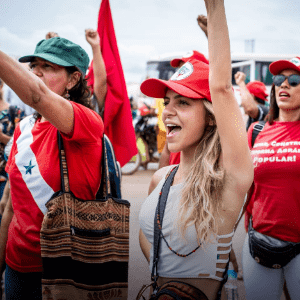
Getting ready to walk in the Global Day of Action march in Durban, South Africa where the UN COP17 talks are taking place
It wasn’t easy to get the right route for the Global Day of Action march, but after multiple negotiations with the municipality a path was finally agreed on. It would start at Botha’s Garden, going towards Down West Street, turn into Aliwal Street [ Samora Machel ] and then in Braam Fisher Street [Ordinance Road] to meet the UN President of COP 17, Christina Figueres at the International Convention Center. The march ended at the Old Pavilion site, next to the beach.
Arriving at Botha’s Garden around 10am, I found a huge octopus marking the ending point of the march. The octopus represented USA and its demands for more carbon markets!
I joined the march with IDEX Partner Biowatch who had brought 15 farm workers (mostly women) from rural KwaZulu Natal to Durban to be part of the protests at the People’s Space and the International Convention Center (ICC) where the UNFCCC conversations were happening.
This was the first time the farm workers had been part of this process and in their debrief later many expressed how powerful it was for them to see African leaders in different networks and movements.
Nov
30“We are part of the solutions to the challenges we’re facing. We could be the biggest solution” – Dispatches from COP 17
2011
Posted by IDEX
During COP 17, the UN’s latest round of climate talks, civil society organizations – including 4 IDEX Partners – are mobilizing from all over the world to put pressure from the outside on the government negotiators on the inside.
Katherine Zavala – IDEX’s Program Manager, Grassroots Alliances – is in South Africa on a site visit to our partners and to support their activities at COP 17. She reports from Durban.

Workshop participants make signs for the Global Day of Action march at the Biowatch/ABN Agroecology and Climate workshop
During the week of COP17, IDEX Partner Biowatch facilitated a workshop on Agroecology and Climate with African Biodiversity Network (ABN) at the People’s Space.
The event drew over 55 participants consisting mostly of women farm workers, but also men and youth from rural KwaZulu Natal, Tanzania, Mozambique, Uganda and Kenya.
The workshop highlighted agroecology as a key solution to climate change.
Many Western-oriented thinkers define this as the alternative method of agriculture, but as quoted from Gathuru Mburu, ABN’s Director from Kenya, “This is not the alternative for me. This is the natural path that we should and ought to be following.”
Four experts on agroecology shared their practices and experience: Mercy Mutave from Institute for Culture and Ecology (Kenya); Helena Paul, Eco Nexus (UK); Lawrence Mkhalipi, Biowatch (South Africa); Sophiwe Florence Dlamini, Biowatch Community Facilitator in Pongola, KwaZulu Natal (South Africa).
An estimated 40,000 people from all around the world are arriving in Durban, South Africa this week for COP 17, the UN’s latest round of climate talks. Civil society organizations – including 4 IDEX Partners – are mobilizing from all over the world to put pressure from the outside on the government negotiators on the inside.
Katherine Zavala – IDEX’s Program Manager, Grassroots Alliances – is in South Africa on a site visit to our partners and to support their activities at COP 17. She reports from Durban.

What is COP17?
COP17 is the 17th annual meeting where world governments get together to discuss and negotiate solutions to mitigate climate change. COP stands for Conference of Parties – the parties being the 195 nations that signed the United Nations Framework Convention on Climate Change (UNFCCC).
The ultimate goal of the UNFCCC is to get nations to cut greenhouse gas emissions, so that these gases stabilize at a level that will prevent “dangerous” climate change.
Why COP 17 Matters for Grassroots Organizations
Many grassroots organizations were disappointed with the outcome of the last COP (COP16), held in Cancun, Mexico to the point where many feel (and rightly so) hopeless with this process and foresee governments once again prioritizing false market-based solutions to climate change.
But it is important to continue to mobilize and amplify the voices of grassroots organizations, especially those based in South Africa, as the COP17 lands on the African continent for the second time.
The People’s Space: IDEX’s South African Partners and Their Role in COP 17
Durban is home to two of IDEX South African Partners. One of them, South Durban Community Environmental Alliance (SDCEA), is actively convening and establishing the alternative civil society space (The People’s Space) during COP17.
This space will provide the base for organizations to network and share grassroots solutions to tackle climate change in real, practical ways to ensure their communities’ ability to cope with and adapt to climate change.
Four IDEX Partners in South Africa to Present Their Climate Justice Solutions
IDEX will be present at the civil society space, as an ally and supporter of four IDEX Partners and Grantees who will all be present this week organizing and networking to promote their climate justice solutions:
Last week, IDEX and the work of our partner Biowatch were featured in an article in the The Huffington Post. The article is reprinted below.
A small community garden, situated in a remote rural backwater, is breaking new ground towards sustainable, organic, healthy food production. Twenty-one women have converted their subsistence gardens that once barely produced enough to feed their own families into a robust community garden producing a surplus for sale at the local market.
In the words of the group’s treasurer, “Many of our neighbors use artificial fertilizers and chemical pesticides, but we now have the skills to be able to produce naturally and successfully.” Her name is Mrs. Mncube. She and her neighbors live in the KwaHhohho region of South Africa.
To counter rural South Africa’s ongoing food crisis, Biowatch has established indigenous seed banks to empower Ms. Mncube and other farmers to preserve local “food sovereignty” with sustainable, organic food production methods. You can watch a video about Mrs. Mncube and her campaign for food justice below.
“The reason people go hungry today has nothing at all to do with a gap between the amount of food in the world….There’s more than enough food on earth today to feed the world one and half times over,” according to Raj Patel in the Value of Nothing. The challenge, Patel concludes, is lack of economic and political empowerment.
One out of seven people in the world is slowly starving to death — a de facto global concentration camp of hunger. One billion people lack the basic daily calories needed to survive. This is what the policy wonks mean by “food insecurity.”
Casting aside the sterile language of the economic development geeks, imagine if one out of seven people lacked “clothes security” and walked around nearly naked part of the year. Global hunger should make you sad or mad.
Consider Biowatch’s American collaborator, IDEX (International Development Exchange). Recently awarded a coveted Fellowship to the 2011 Opportunity Collaboration, IDEX is not your typical top-down, know-it-all economic development nonprofit. Started in 1985 by a handful of ex-Peace Corps volunteers who believed “small grants targeted to grassroots groups — who had the trust of their neighbors and the knowledge of what was needed in their own communities — [would be] more effective than traditional large scale philanthropy.”
Biowatch is one example of IDEX’s commitment to nurturing innovation and problem-solving at the village and community level. IDEX currently works with grassroots partners in Guatemala, India, Mexico, Nepal, South Africa and Zimbabwe.
None of us wants to get tricked or trapped into responding to a genuine problem, like mass hunger, with phony philanthropy. None of us wants to go through the senseless activity of appearing to help people without taking into account the “unseen cemetery of invisible consequences.”
Want to make a growing difference? IDEX is your answer.
What do you think? Read the original here, and please share and comment.
In November and December, two of IDEX’s partner groups in South Africa were featured in the news!
Angus Gillis was featured in the most recent edition of Business Link out of South Africa. The article highlights their great work in grassroots community development in Grahamstown, SA and the many facets of Angus Gillis’ efforts in health, education, and self-help groups. (To read the article in its original format click on http://www.businesslink.co.za/magazine/ and flip to page 8.)

South African corn is a diverse crop- GM seeds would reduce farmers' ability to harvest and save their seeds, degrading that diversity and endangering farmers' independence.
Biowatch, another IDEX partner out of South Africa, was in The Ecologist. Biowatch speaks out against the co-option of local seed by big agribusinesses Monsanto and Dupont, specifically in stopping a current proposal for a merger between Dupont’s subsidiary, Pioneer Seed, and Pannar Seed that would expand their control of the seed business.
Biowatch and other activist groups argue that allowing foreign corporate control of South Africa’s seed supply would erode the availability of traditional conventional seed varieties, hurt export business with countries opposed to biotech crops, and force farmers deep into debt to pay for expensive seeds that are the patented properties of the U.S. corporations.
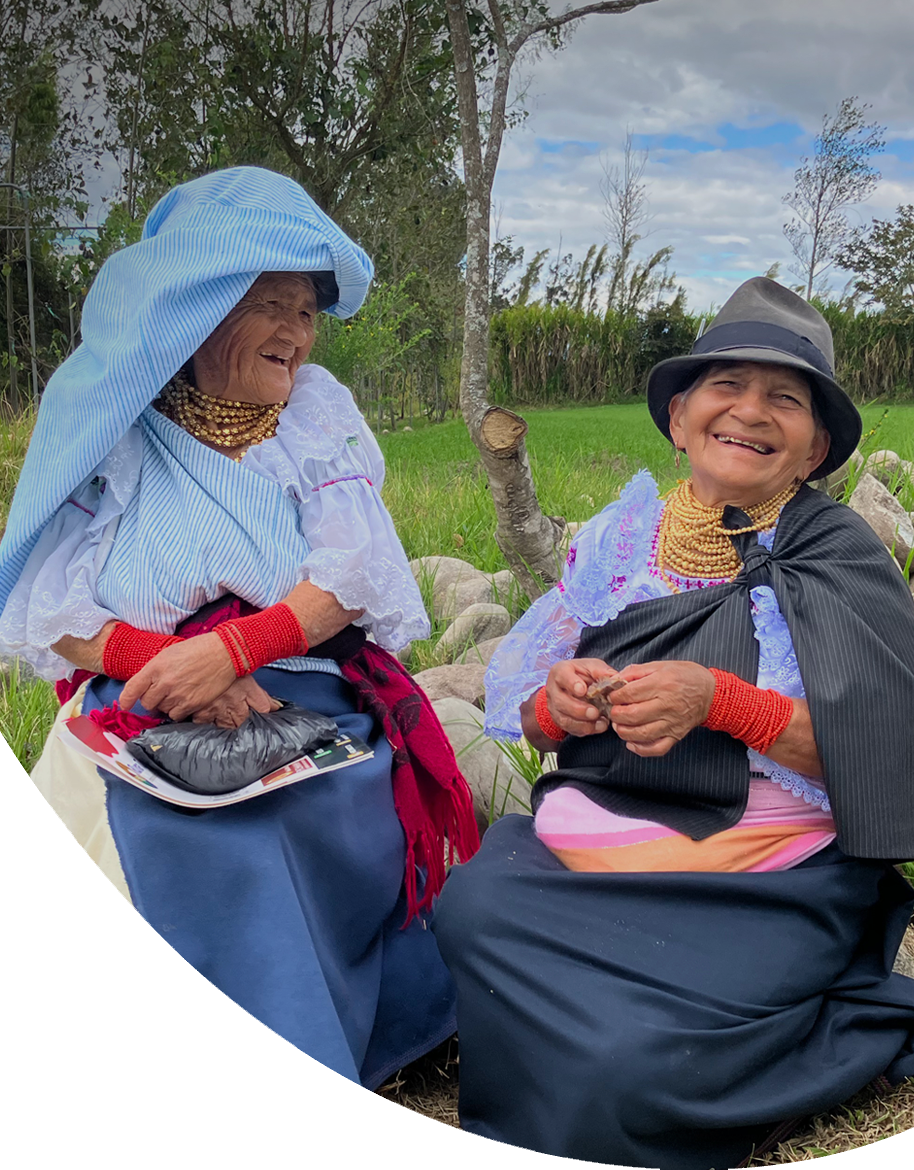
In the rural community of KwaHhohho, South Africa a group of 21 women have pooled their resources to start a community garden. Thanks to training from IDEX partner Biowatch, the garden both generates income to support group members’ families and encourages shared information regarding traditional agricultural methods. In addition to the community garden, each woman also maintains a household vegetable garden.
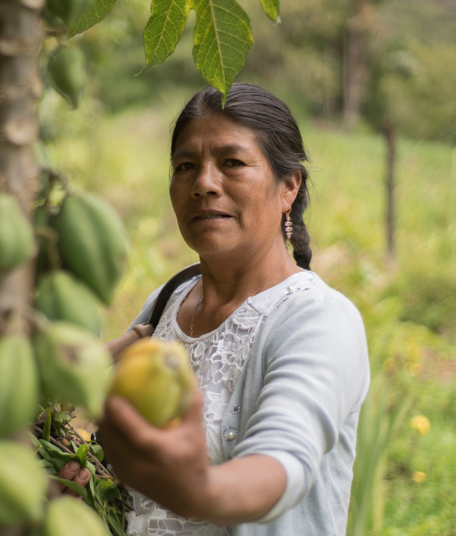
One group member, Mrs. Mncube, lives with her husband and her four children in KwaHhohho. She spends her days tending to the community plot as well as her own household garden, which greatly contributes to the family’s food security. When her children come home from school, they assist her in the household garden. As Mrs. Mncube wants to pass down her knowledge to her children, each child has a small plot to tend to alongside her own.
In recent decades, farmers throughout South Africa have been persuaded to adopt industrial farming methods, including the use of genetically modified (GM) seeds. In addition to many negative environmental and health consequences, GM seeds and industrial farming threaten indigenous seed varieties, ultimately diminishing food security for rural farming families.
To counter rural South Africa’s ongoing food crisis, Biowatch offers education and training programs for farming communities. Biowatch’s programs also provide schools, households and communities with alternative approaches to food production.
To revive the loss of the traditional seed varieties, Mrs. Mncube and her fellow group members grow traditional seed multiplication plots. Households are encouraged to plant at least 10 traditional seed varieties to encourage crop diversity. As the group’s treasurer, Mrs. Mncube is responsible for keeping track of the collective income earned by the group’s surplus vegetable production.
Mrs. Mncube and other group members travel 35 kilometers by public transportation to the nearest town to sell surplus produce from the community garden. Although it is sometimes difficult to sell produce in town due to the saturated market, Mrs. Mncube reports that she is nonetheless able to earn additional, much-needed income for her family.
Previously, Mrs. Mncube only planted a small plot, but with help from Biowatch she maintains a large diverse garden as well as a seed plot. She says that after receiving training from Biowatch, she has a newfound appreciation for traditional agriculture methods such as composting. These methods, she notes, have improved the soil on her land. Biowatch has also educated Mrs. Mncube and the group members on the negative impact of Genetically Modified Organisms (GMOs).
“Many of our neighbors use artificial fertilizers and chemical pesticides but we see the negative impacts of chemicals on the soil and we now have the skills to be able to produce successfully and naturally.”- Mrs. Mncube, treasurer of the KwaHhohho community garden.
Mrs. Mncube says that she enjoys being a part of the committee because it allows the members to share information and gardening practices. Moreover, since the group works cooperatively, production yields have increased. Having realized that she can make a living from farming, Mrs. Mncube’s dream is to one day live completely off her garden.
One of our newest partners, Biowatch is a small South Africa-based NGO that for the last decade has been advocating for local food sovereignty through community training programs in sustainable, organic food production methods.
Story by Deborah Goldberg, IDEX Development Associate, adapted for the blog by Erin Zaleski, IDEX Volunteer & Journalist.
Aug
26International Seminar for exchanging experiences, Brazil, India and South Africa
2010
Posted by IDEX
Earlier this month a seminar on biodiversity and biosafety was held in Brazil, by the IBSA (India, Brazil, South Africa) partnership. It was attended by the partnership of AS-PTA in Brazil, Chetna in India and Biowatch (IDEX Partner) and Surplus People Project (IDEX Grantee) in South Africa. Our appreciation is given to the AS-PTA for allowing us to publish their report.
The International Seminar for exchanging experiences, Brazil, India and South Africa: biodiversity and biosafety, was held in the city of Rio de Janeiro on August the 9th and 10th with around 40 participants.As well as the organizations from Brazil, India and South Africa linked to the Ford-IBSA project, the seminar was attended by representatives of entities from Peru, Uruguay, the United States, the Philippines and Germany working in the area. The latter came at their own cost in response to AS-PTA’s invitation to organizations from other countries campaigning on the GMO issue. Around 15 Brazilian organizations also took part in the seminar and had their travel costs and expenses met by the Ministry of the Environment and the Ministry of Agrarian Development, thereby expanding the scope of the seminar, originally planned for members of the project only. University organizations and students from Rio de Janeiro were also present.
The seminar was composed of five panels. Four of these presented case studies produced by the entities taking part in the project. The session opened with an analysis of the agronomic and economic efficiency of the main GM crops (soya in Brazil, cotton in India and maize in South Africa), highlighting the gap between the situation experienced in the field by farmers who have adopted GM seeds and the promises made by the industry. This was followed by a debate on the biosafety legislation in the three countries. In the Brazilian case, input also came from the Federal Attorney responsible for coordinating the Federal Public Prosecutor’s Working Group on GMOs and Pesticides, who analyzed the organ’s role in monitoring the National Biosafety Technical Commission (CTNBio). Explaining the actions taken by the Public Prosecutor’s Office to rectify CTNBio’s mistakes, the Attorney General emphasized that the Office is actively working on the issue largely because of the demands made by civil society. A member of CTNBio representing the pro-biosafety group on the commission also took part in the seminar.
The reviews of studies on the impacts of GMOs on the environment and human health commissioned by AS-PTA were presented by a consultant from Nead/Ministry of Agrarian Development and a researcher from Fiocruz, respectively. This panel showed that there now exists a growing body of scientific evidence corroborating the warnings made years earlier, but discarded by the regulatory bodies of various countries, in general concerned less with biosafety issues and more with the interests of the biotechnology industry.
The program also included a panel on the Cartagena Protocol on Biosafety to the UN Convention on Biological Diversity, whose Fifth Meeting of the Parties (MOP 5) will be held in October in Japan. The Third World Network’s representative explored the main themes on the negotiation agenda at MOP 5, while the representatives from the Ministries of the Environment and Agrarian Development discussed the internal process of formulating the Brazilian position and their expectations for the event in terms of advances in implementing the agreement. As well as updating participants on the current negotiations, the roundtable performed the function of amplifying the Brazilian government’s dialogue with the organizations who work on the issue, anticipating the preparatory process for the next round of negotiations.
On the 11th and 12th a meeting was held of the GM campaigns who had attended the seminar: AS-PTA and Terra de Direitos, representing the group coordinating the Brazilian campaign, the Pesticide Action Network – North America PANNA, the Philippines Third World Network, Uruguay Redes, ETC Andes Peru and EED from Germany, as well as Chetna from India, and Biowatch and the Surplus People Project from South Africa. This meeting was convoked with the objective of initiating a process of international coordination of initiatives on the issue. At the end of the meeting a number of common themes were reached, identified as priorities by the participants based on the specific contexts in each of their regions (contamination and monopoly of the seed market, legislation and risk analysis, information and organic markets). These themes were prominent among the challenges cited during the seminar, especially the panel on campaign work. The participants also established activities for each of these points, which combined can form the basis for a partnership and exchange project. It was concluded that the meeting had achieved its objective of initiating a process of closer liaisons between campaigns from different countries with the aim of creating a shared platform for interaction.
Responding to AS-PTA’s invitation, organizations from other countries expressed their interest in taking part in the activities, but could not attend as they were unable to cover their travel costs. This fact reinforces the potential of the initiative and illustrates that efforts should be made to promote or make use of international meetings and exchanges that continue the process of building a shared platform for campaigning on the GMO issue with the aim of strengthening civil society.
Older Posts »