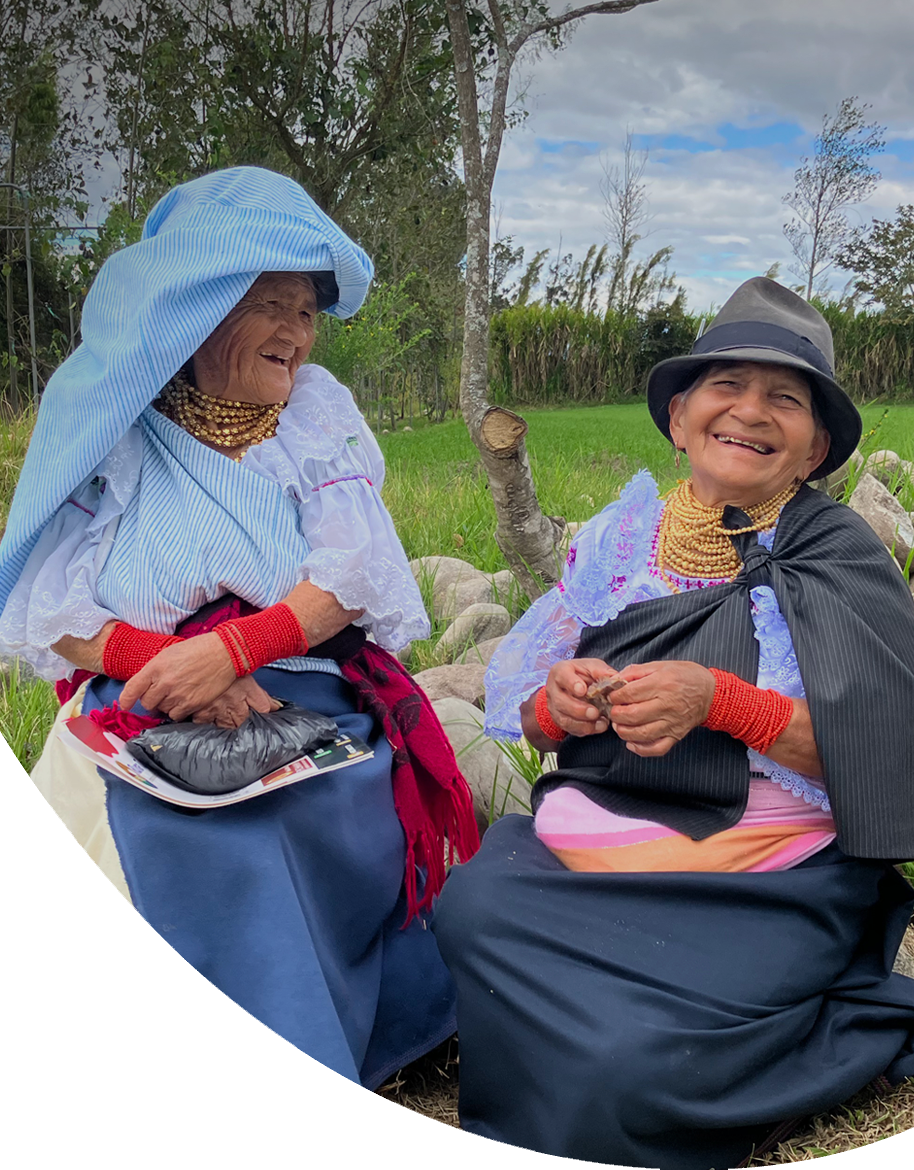

Posts Tagged ‘AFEDES’
To celebrate International Women’s Day, Tuesday, March 8, many IDEX partners planned and participated in local events.
One partner AFEDES, in Guatemala, led a press conference at the Cultural Center in Antigua with other women’s groups to demand the government support initiatives for women’s development and safety under constitutional law. Read the rest of this entry »
March 8th is International Women’s Day and 2011 marks the 100th anniversary of this day to celebrate women across the globe.
IDEX staff and volunteers are taking part in Mother’s March in San Francisco- come join us at 4:30pm near the 16th St. BART station and march to protest war and oppression, support social justice and solidarity with women around the world. See our event posting HERE.
IDEX also stands in solidarity with our partners around the world who are celebrating this historic day. We are getting updates from Guatemala, Mexico, South Africa, and Nepal.
Read about the exciting events they are planning below:
AFEDES: In Sacatepéquez, Guatemala, AFEDES is coordinating with other women’s organizations in holding a press conference to demand the Guatemalan state fund the construction of a women’s center for the survivors of violence and to demand public investment for women’s development, including implementing the Femicide Law. Although the 2008 law, a huge victory for feminists and women’s rights organizations, considers violence against women a punishable act, many women and those in the judicial system are unaware of the law and thus implementation is weak. AFEDES has been creating awareness on the law and empowers women to speak up for their rights and come forward about abuse.
APROSADSE: APROSADSE is organizing a celebration with a group of women and mothers of families of the students who participate in APROSADSE’s radio distance-learning education program. They are planning a morning filled with exchanging experiences as housewives and integrating a lens of gender equity. The official theme for International Women’s Day activities is “Access to education for women and girls: training, science and technology” – sharing the rights that women have to education for economic development and social change.
Nepi Behña: Nepi Behña in Mexico is working together with RedPar – National Network of Rural Promoters and Advisors – in a National Gathering of indigenous, rural and mixed race women this week. The gathering will address the findings of an investigation they carried out last year about the impact of the food crisis and climate change – as well as the changes in migration patterns.
Positive Women’s Network: Positive Women’s Network in South Africa will be holding an event to celebrate the lives and achievements of women living with HIV/AIDS. The event will host 50 women from PWN outreach areas and will provide a platform for the women to recognize and applaud each other for their achievements as women, PLWHA, mothers, caregivers and community members. The event will also provide a discussion session for the women to engage each other on issues that predispose women to gender-based violence and risky behaviors leading to HIV/AIDS as well as methods of increasing the involvement of women in HIV/AIDS and sexual and reproductive health policy design and implementation.
Whole World Women Association: WWWA, also in South Africa, will have an event on Saturday, March 12th to celebrate International Women’s Day. The theme is “Women’s Reproductive Health.” An International Women’s Day Panel Discussion will be held with representatives of the reproductive rights alliance, gender activists, and feminists attending.
Women’s Awareness Center Nepal: Women Awareness Center Nepal’s training and resource center will be inaugurated by rural women on March 8th. Women from the village will share their experiences of empowerment with the audience in the program and after the inauguration, 1000 members of WACN promoted cooperatives will participate in a rally in Kathmandu on the occasion of 100th Women’s Day in support of the IWD theme for this year “Equal access to education, training and science and technology: path way to decent work for women.” Informational placards displayed at the rally will address challenges such as, tax break for cooperatives run by village women, allocate more resources for disadvantaged women, timely drafting of the constitution, and the right to citizenship through motherhood.
Look for photos and an update from the event on our blog!
Dec
12“When a Butterfly Comes Out of Her Cocoon” – Reflections on Developing Women’s Leadership Skills in Rural Guatemala
2010
Posted by IDEX
IDEX Program Officers Katherine Zavala and Yeshica Weerasekera traveled to Guatemala in September to visit IDEX partners AFEDES, APROSADSE and ISMU as well as new groups and allies working in various social justice movements. This report is from Katherine on her visit to AFEDES.
On my trip to Guatemala in September, I went to Chimaltenango to observe the first workshop of AFEDES’ leadership training series– a follow up to the last year’s training program on political and civic participation to empower women.
The ultimate objective of the training is to build a network of community facilitators, where rural women gain the skills and capacity for training and community organizing in their respective communities.
The plan is for this group of nine women to graduate from this program next March. AFEDES is excited to see what the women will take from the training program next year, and I am, too.
In honor of International Day for the Elimination of Violence against Women on November 25th, we present to you an on-the-ground report from IDEX Program Officer Katherine Zavala. Katherine was in Guatemala in September to visit IDEX partners AFEDES, APROSADSE and ISMU as well as new groups and allies that are working in various social justice movements.
Prior to my arrival in Guatemala, I had been reading media reports about increased violence against women in the country. Some articles even claimed that incidences of violence against women surpassed the number of cases in Ciudad Juarez, Mexico (find their website here). According to the site, by Guatemala’s Human Rights department, more than 4,000 women were murdered between 2000 and 2008. The Guatemala Human Rights Commission has also published a more extensive report on violence against women in Guatemala.
The 2008 passage of the Femicide Law was a huge victory for feminist and women’s rights organizations. Previously, the only law addressing violence against women (VAW) was the law to Prevent, Sanction, and Eradicate Domestic Violence, which passed in late-1996. However, as it didn’t recognize violence as a punishable crime, the law’s ability to protect women was limited. Under the Femicide Law, violence against women is considered a punishable criminal act, and perpetrators can receive harsh sentences for their crimes.
Although it has been more than two years since the passage of the law, many people, including those within the governmental judicial system, are unaware of it. As a result, the law is not being effectively implemented.
To raise awareness, IDEX partner Alliance to Promote Equity and Development in Sacatepéquez (AFEDES) actively participates in coordinating municipality town halls and forums. Known as “Tables of Dialogues” (Mesas de Diálogos), legal experts are invited to talk with community members from different sectors about the necessary steps for submitting a denouncement involving violence against women.
IDEX Program Officers Katherine Zavala and Yeshica Weerasekera traveled to Guatemala in September to visit IDEX partners AFEDES, APROSADSE and ISMU as well as new groups and allies that are working in various social justice movements.

Program Officers Yeshica (far left) and Katherine (middle) in a meeting with community members of Balcones de Palin.
Today we drove 43 km outside Guatemala City to the state of Escuintla to visit the settlement community of Balcones de Palin. Over 400 families live here–all displaced from different states throughout Guatemala after Hurricane Mitch destroyed their land and homes more than a decade ago. Following the hurricane, the government transferred many people from Guatemala City to Balcones de Palin, and IDEX partner Institute for Overcoming Urban Poverty (ISMU) traveled to the area to determine what had become of the people from the community of La Verbena.
ISMU discovered significant needs in the community. Since people lacked the necessary land titles to build new structures, ISMU created a commission to ensure the granting of land titles to community residents. However, despite eventually granting the land titles, the government still hasn’t provided additional services or infrastructure support. Through ISMU, community women are participating in housing improvement programs, a revolving loan fund, and providing children with educational support.
Once we arrived in Balcones de Palin, community organizer Doña María welcomed us to the local school where students were practicing a marching song for their big parade on Independence Day. We were then taken to her house, where many women and youth had gathered to discuss the various ISMU programs in which they had participated. Many of the families have benefited from the housing improvement program, in which ISMU facilitated the acquisition of wooden boards and steel plates to reinforce existing shacks.
A natural community leader, María facilitated the conversation. She has participated in several ISMU-led workshops on self-esteem, leadership, and community organizing. She noted that while her house was humble, “the richness is in my children.” She wants to see continued improvements in the livelihoods of the community and has formed the Holistic Association in Balcones (ASOBAL). Comprised of 3 men and 8 women, the organization is working to identify needs in the community and to find ways in which to address them.
This is a close-knit community in which members clearly look after each other. For instance, it is not unusual for the community to care for children who have lost parents.
As we left Balcones de Palin, we were impressed by the determination of community members to improve livelihoods and rise to the economic and environmental challenges around them.
To learn more about ISMU’s work in Guatemala please click here.
IDEX Program Officers Katherine Zavala and Yeshica Weerasekera traveled to Guatemala in September to visit IDEX partners AFEDES, APROSADSE and ISMU as well as new groups and allies that are working in various social justice movements.
This morning we traveled with IDEX partner Institute for Overcoming Urban Poverty (ISMU) to the outskirts of Guatemala City to visit two communities that were severely affected by Storm Agatha.
Our first stop was Tecun Uman in Chinautla. Originally a vacant area that was later settled by people who had been displaced by the 1976 earthquake, about 600 families now live here. Very young mothers—some as young as 13—are commonplace, and while boys in the area are encouraged to go to school, educating girls is not a priority. Many families also lack access to basic services.
While some members of these communities travel to Guatemala City to work, many people’s primary source of income is derived from trips to a garbage dump where they search for any bit of precious metal.
Nicknamed “the mine,” jewelry lost in the city often winds up in this cave-like area at the bottom of the dump. The area is full of toxic fumes and there is a risk of flash floods, which can sweep away someone in a matter of minutes. The recent storm has made an already risky job all the more so.
When we arrived, two of ISMU’s community facilitators – Leticia and Cristina – warmly welcomed us. Both woman are from Chinautla, and explained that most families in the area were affected by storm Agatha.
The storm destroyed 40 houses and even three months after the storm hit, the effects are still devastating. Just recently, three children were killed after their house collapsed. Because the road was blocked, it was too hard to reach them in time.
In the area near the river, where the storm destroyed many homes, we saw how precarious the cliffs were. At the short time we where there, we saw a large piece of land crumble down into the river. The cliff we were standing on didn’t look like it would hold much longer. Many of the houses have been evacuated – still, people cross here all the time. In fact, this is the path that children use daily to get to school.
In the aftermath of the storm, both Leticia and Cristina, who are trained as community organizers by ISMU, contacted the local municipality to obtain temporary shelter in the communities for 13 families. ISMU has also helped with securing construction materials to reinforce damaged homes.
One woman we met in the temporary shelters was named Lucy, a single mother of two young sons who relies on visits to “the mine” to eke out a living. Lucy has no other means of earning an income. The Q200 (about $24.50) a week is enough to cover food and a portion of electricity, so she takes the risks to support her children.
To address these ongoing community issues, ISMU-trained community facilitator like Leticia and Cristina are following up with their neighbors to document updates of each family’s situation, and is requesting appropriate support from the government for communities that are positioned in high-risk areas.
ISMU is also taking part in a national alliance in Guatemala to educate and contribute to climate change discussions and have delegated a representative from the alliance to be present at COP16, the UN Climate Change Conference in Cancun, Mexico this year.
To learn more about ISMU’s work in Guatemala please click here.
Sep
21“This is not a poor country, this is a country that has been impoverished.”
2010
Posted by IDEX
IDEX Program Officers Katherine Zavala and Yeshica Weerasekera are in Guatemala this month of September to visit IDEX partners AFEDES, APROSADSE and ISMU as well as new groups and allies that are working in various social justice movements. Yeshica Weerasekera writes this blog from Guatemala to start off our series on Guatemala.
Katherine and I arrive in Guatemela on a bright and clear morning, eager to get a firsthand look at the progress made by our partner groups. We are particularly excited to arrive, since we nearly had to cancel the trip due to two subsequent natural disasters that destroyed bridges and roads around the country. Torrential rains following the devastation of Storm Agatha caused mudslides that killed dozens of people, displaced thousands of others and made even major roads impassable. Enormous sinkholes remained in Guatemala City due to the May eruption of the Pacayo Volcano, making travel even more treacherous. However, after talking to our partner groups, we felt reassured that we could make the trip.
After an overnight flight, we hit the ground running. Like many capital cities around the world, Guatemala City is swept up in the hustle and bustle of big-city activity, with scores of cars and buses spewing diesel fumes. Sadly, one of the first things we hear about is the elevated crime rate. As in other regions of Guatemala, the high crime rate can impede normal business and leisure activities. Machine-gun carrying guards are everywhere, standing outside of banks, malls and other facilities. It makes for an uneasy feeling, and locals warn us about our safety. So wary are we of crime, in fact, that during our three-day visit to Guatemala City we can’t even hail a cab on the curbside. Although I am a visitor, I cannot help but wonder about the psychological effects of living with this constant threat on a daily basis.
Despite the destruction from the recent natural disasters and the high crime levels, another picture of Guatemala emerges almost immediately. There is a sweetness present in the interactions with ordinary people, who go out of their way to help us with information and personal insights. Such kindness is rivaled only by the country’s dramatically beautiful landscape, where views of volcanoes and lush mountains are commonplace. We also feel fortunate to have trusting and open relationships with our partner groups, and look forward to seeing the reality of the country’s challenges and opportunities from their eyes.
On our first day in the city we learn about the general situation from local organizations—United Farmworkers Committee (CUC) and National Coordination of Indigenous Peoples and Campesinos (CONIC)—both of which are working for sustainable livelihoods for indigenous people and rural farm workers.
Prior to the signing of peace accords in 1996, Guatemala was the site of a brutal 36-year armed conflict that killed some 200,000 people. Fortunately, the peace process has brought the armed resistance movements to the negotiating table with the government. These resistance movements had formed to fight for improved conditions for Guatemalan communities, largely indigenous and rural “campesinos,” descended from the mighty Maya and other indigenous groups.
Economic disparity remains severe here, with much of the wealth concentrated in a few hands or extracted by foreign corporations. The elevated poverty levels most severely impact the indigenous and rural communities.
“This is not a poor country, this is a country that’s been impoverished,” says Daniel, a CUC staff member.
He goes on to explain how the peace accords had addressed structural changes like land reform, social benefits and labor reforms such as the minimum wage, and changes to the judicial system. Disappointingly, however, the signing of the Central American Free Trade Agreement (CAFTA) led to the unraveling of any progress towards those accords. Now, there are concessions made to mining corporations, the building of big dams, and the pressing onset of agrofuels industries.
In the light of these serious issues, we wait to meet with our partner groups to see the impact on the communities they work with for ourselves.
They are organizing to collect and distribute supplies and are asking the international community to rally in support of rebuilding the lives and communities that have been devastated by the storm.
The storm followed the eruption of the Pacaya Volcano a few days earlier. In Guatemala alone, the death toll from the two natural disasters is reaching in the hundreds. Tens of thousands more people have been displaced from their homes or are without food and water, and even more severe food shortages are expected in the coming months.
Reports on the ground from IDEX partners tell us of widespread damage. Ten APROSADSE families in the community of la Vega de Godínez lost everything after the Motagua River flooded and destroyed bridges and roads. 35 families fled from their homes located at the bottom of a
hill that is collapsing and destroying crops, and many other communities remain without reliable communication.
collapsed and landslides and floods destroyed both houses and land. Most families there have been evacuated.
During this critical time, our local partners in Guatemala are well positioned to reach those families in need of immediate assistance. They are requesting support to assess the impact of this disaster in their communities and respond to emergency needs: staple foods (beans,
rice, sugar), basic necessities (soap, bedding, and clothing), and building materials to repair or rebuild homes.
Please donate to IDEX today, and support our partners recover from this disaster. Click on the Donate link in the right-hand column and state your donation is for Guatemala Emergency Relief in the notes.

IDEX has been a project sponsor on GlobalGiving for a number of years now. Recently a GlobalGiving intern, Julia, traveled to Guatemala and visited IDEX’s partner AFEDES. AFEDES introduced her to women who were participating in the AFEDES Foot-Loom project that IDEX has posted on GlobalGiving.
We always enjoy hearing about the success of our partners and wanted to share with you Julia’s experience with AFEDES and the impact they had on her.
You can read the GlobalGiving blog here and Julia’s blog here.
Photo credit: Marlon Garcia.
Today, AFEDES invited me to join in two of their regularly scheduled activities.
In the morning, I attended a workshop the staff was participating in called “Popular Education.” This was interesting because we were comparing different models of education. The most common one in Guatemala and many parts of the world is the model that transmits information from one person to the other, but without allowing the student to question or debate the information.
On the other hand, the “popular education” model allows the community members to come together to analyze a problem collectively and find solutions or ideas and then act upon them. The objective here is to construct a plan together, to come out of the meeting with next steps based on an exchange of experiences and perspectives. This is critical training for AFEDES staff to receive, as most of them are working directly with the communities and are facilitating groups of women to help address local issues and needs collectively which requires them to come up with their own solutions.
In the afternoon, I tagged along with Milvian, AFEDES’ Economic Development Program Coordinator and Luisa, an intern who’s currently training women in basic veterinary medicine in the of village Yalu, a 45 minutes drive from AFEDES’ office. I was pleased to see that the road to Yalu had undergone a lot of improvements. On a previous trip to Yalu three years ago, it had caused damage to the bus I was on and I ended up walking an hour to the nearest town. This time the trip was uneventful.
In Yalu, we met with representatives from the village’s council, who want to find a way to address a huge problem they are having with harvest mites, also known as chiggers. The mites are a dangerous pest because they often carry a tiny parasite that carries scrub typhus. Scrub typhus causes fever, headache, muscle pain, cough and gastrointestinal symptoms. It is causing severe illness in children of this village in particular.
AFEDES facilitated the meeting for representatives to come together with a plan to submit to the government to support them with vaccines and medicine. Although this is not a direct service that AFEDES offers, where possible they try to respond to an issue the women have requested support in. This is an example of how AFEDES supports women’s needs outside of their traditional programs.
This day was also a trip down memory lane, when I used to volunteer with AFEDES and would accompany them on their many activities to get a sense of their work. I also had another chance to visit another community I used to spend time with.
This was the final community visit that I had for my trip, and I’m happy that I got a chance to learn so much from the groups: AFEDES, APROSADSE, and ISMU.
Hopefully, you have been able to picture a little bit of what I have visited on this trip, and maybe it’ll encourage you to visit Guatemala. This country is so beautiful and the people here are optimistic, working hard for their families. I feel grateful for having met them, and it encourages me to continue to support them.
Thanks for joining me on this visit!
Until the next one….
Photo credit: Marlon Garcia
Older Posts »